Der Pegel
03.-08.Juni 2026
Halle (Saale)
Art in public
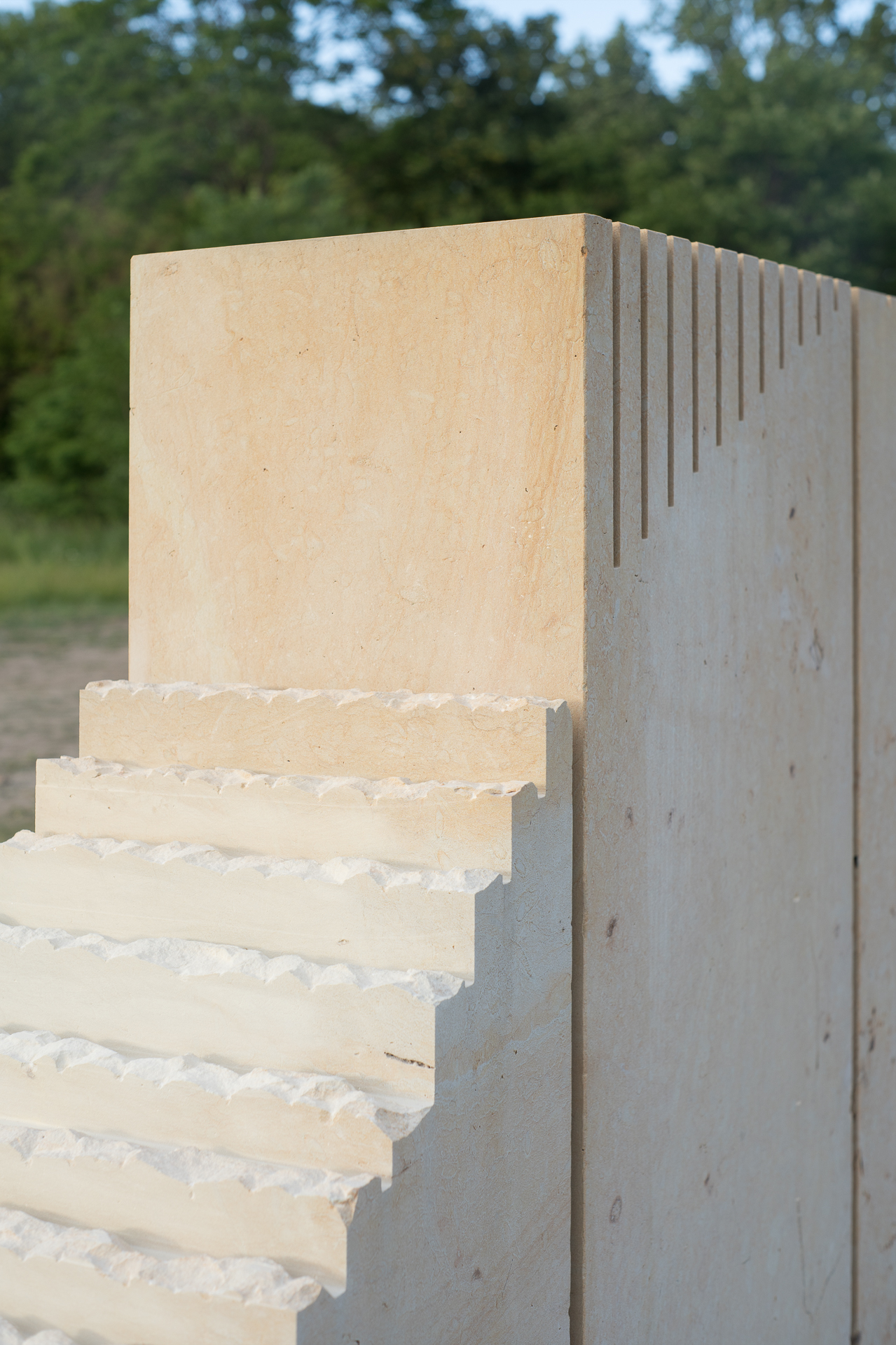
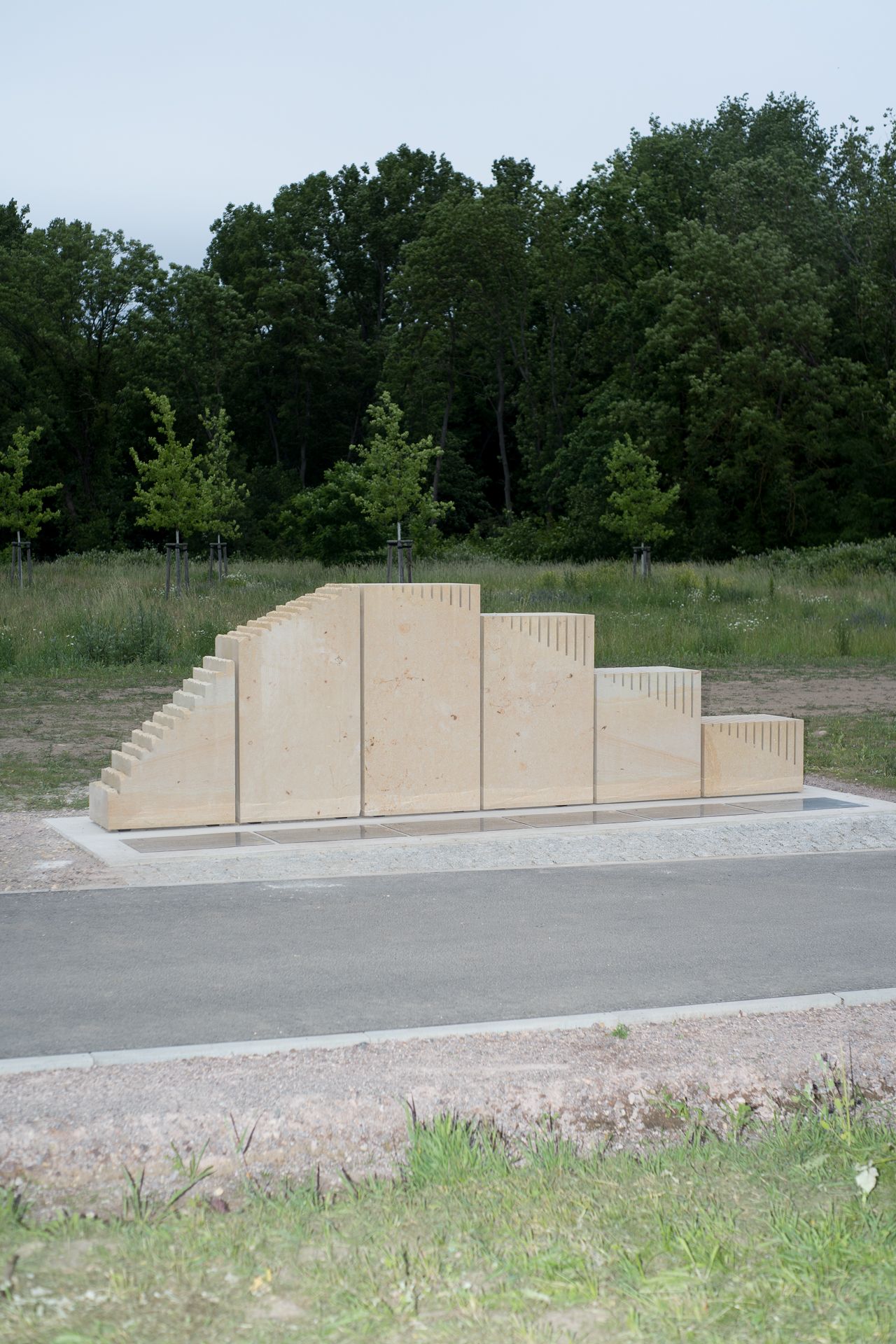
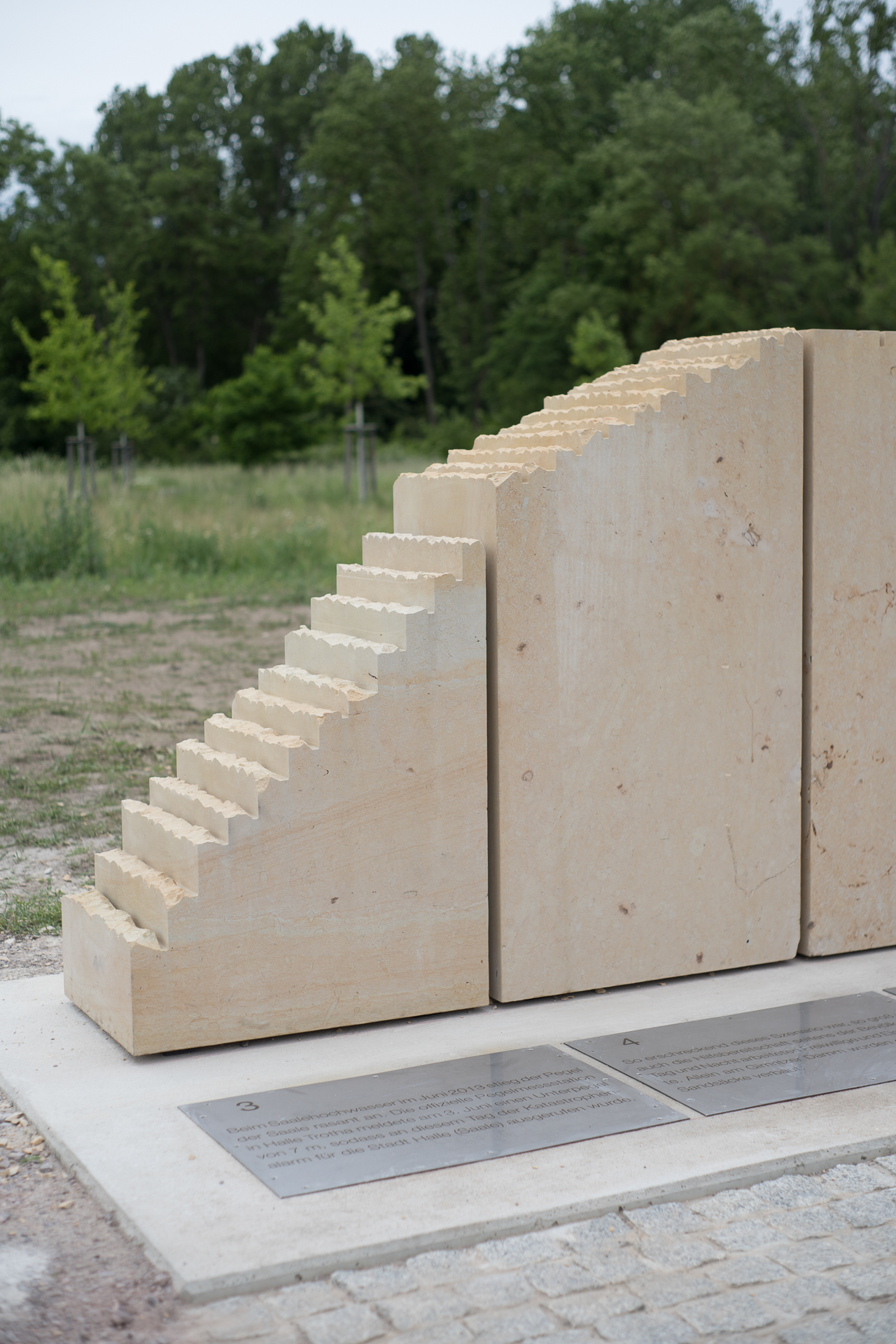
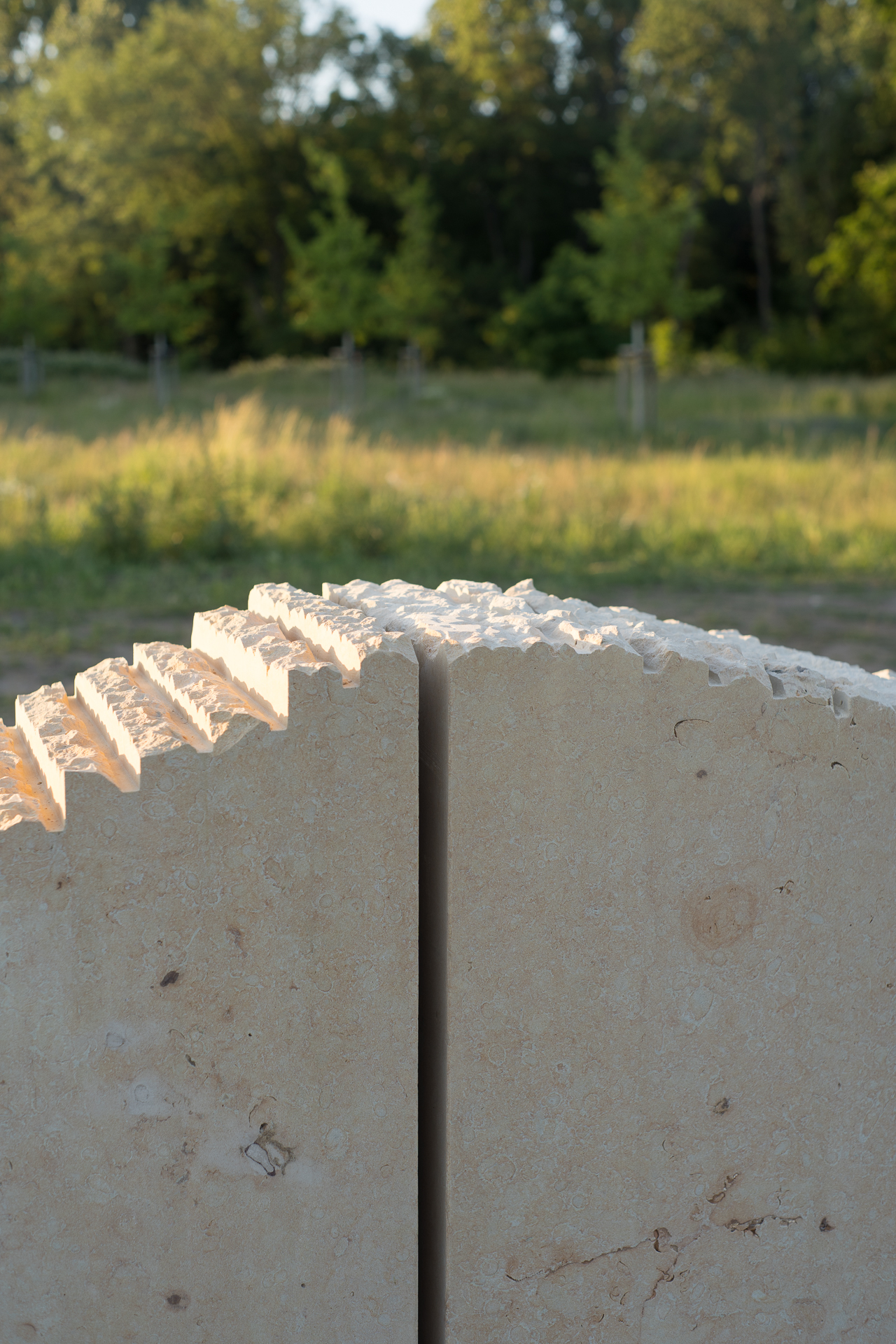
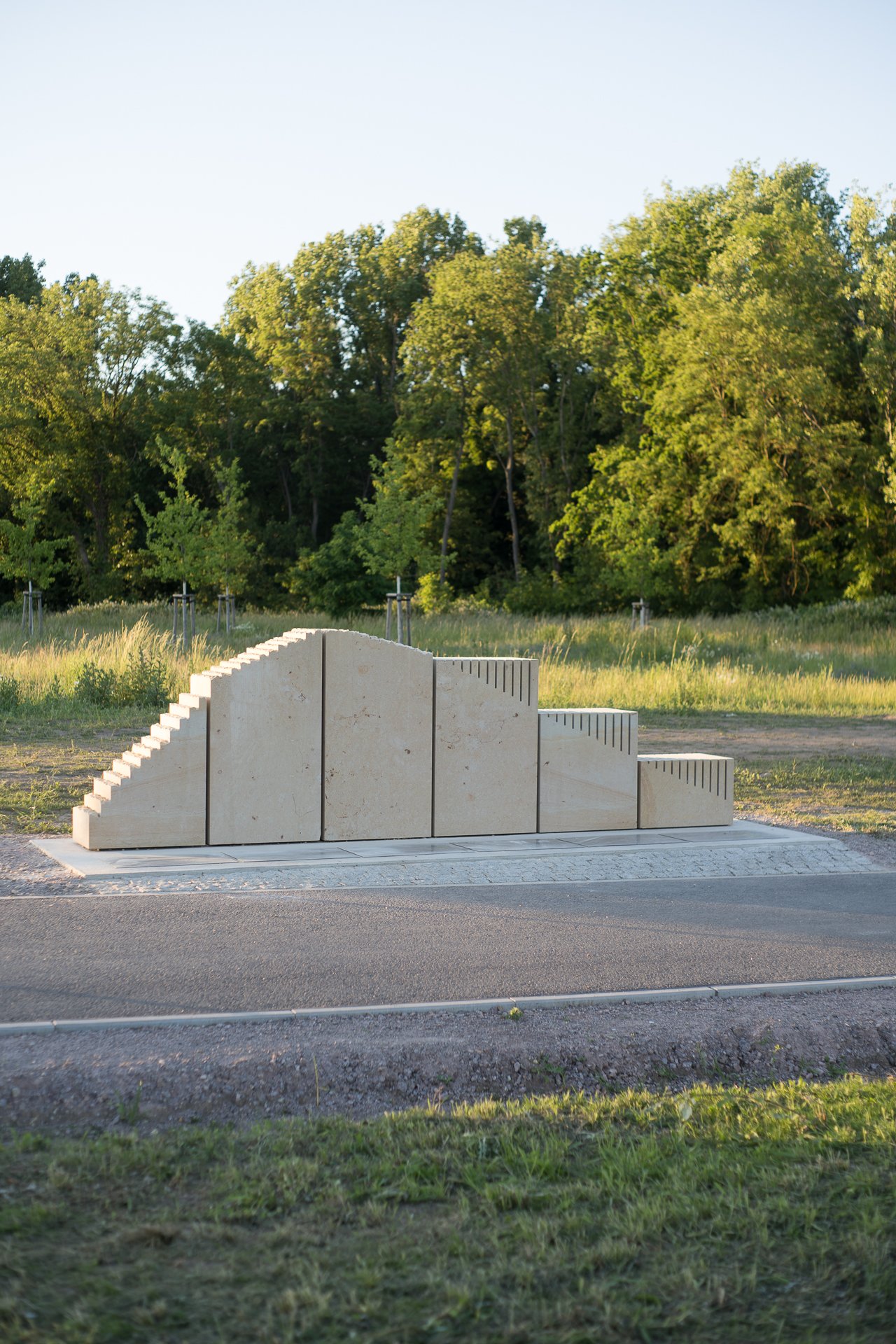
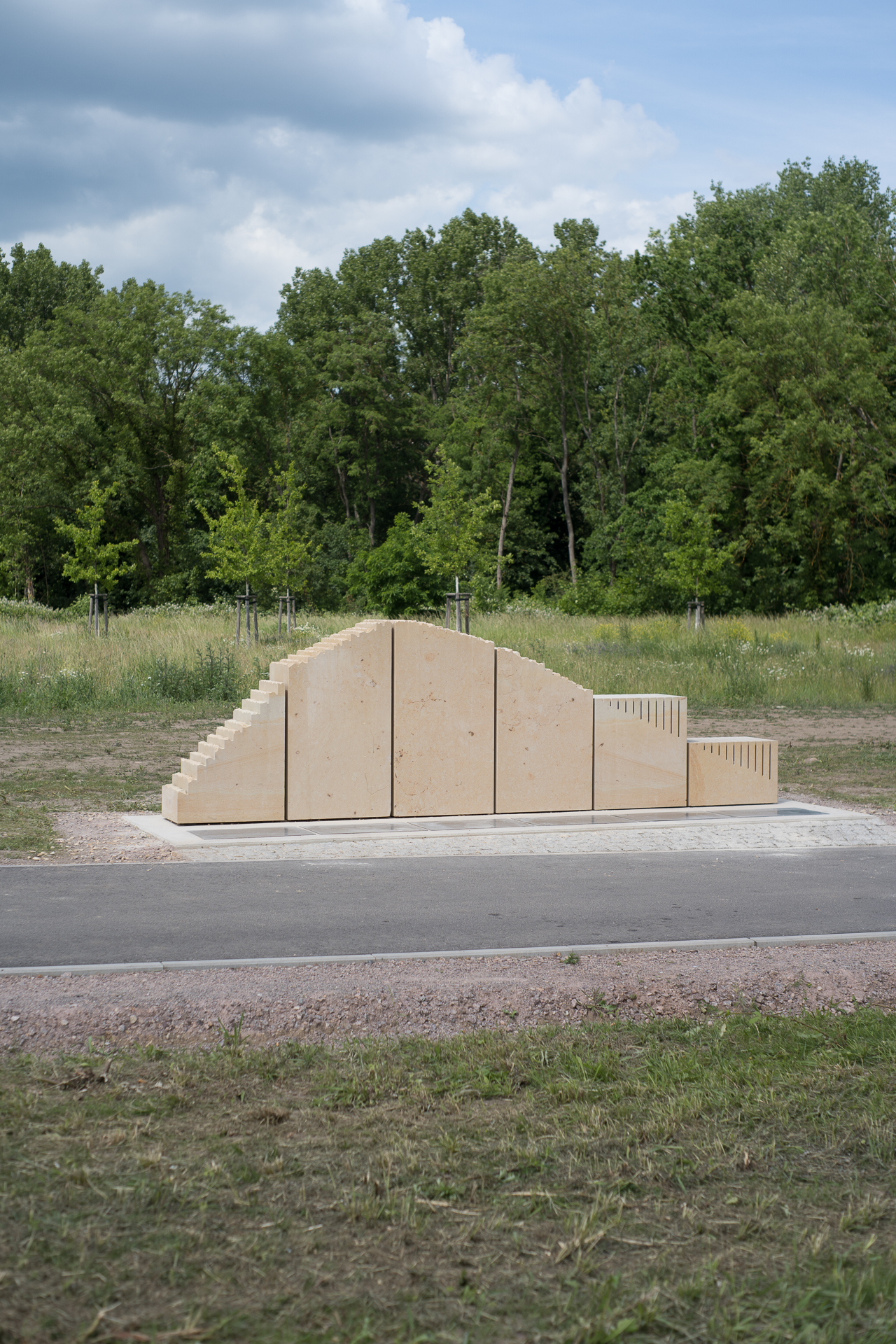
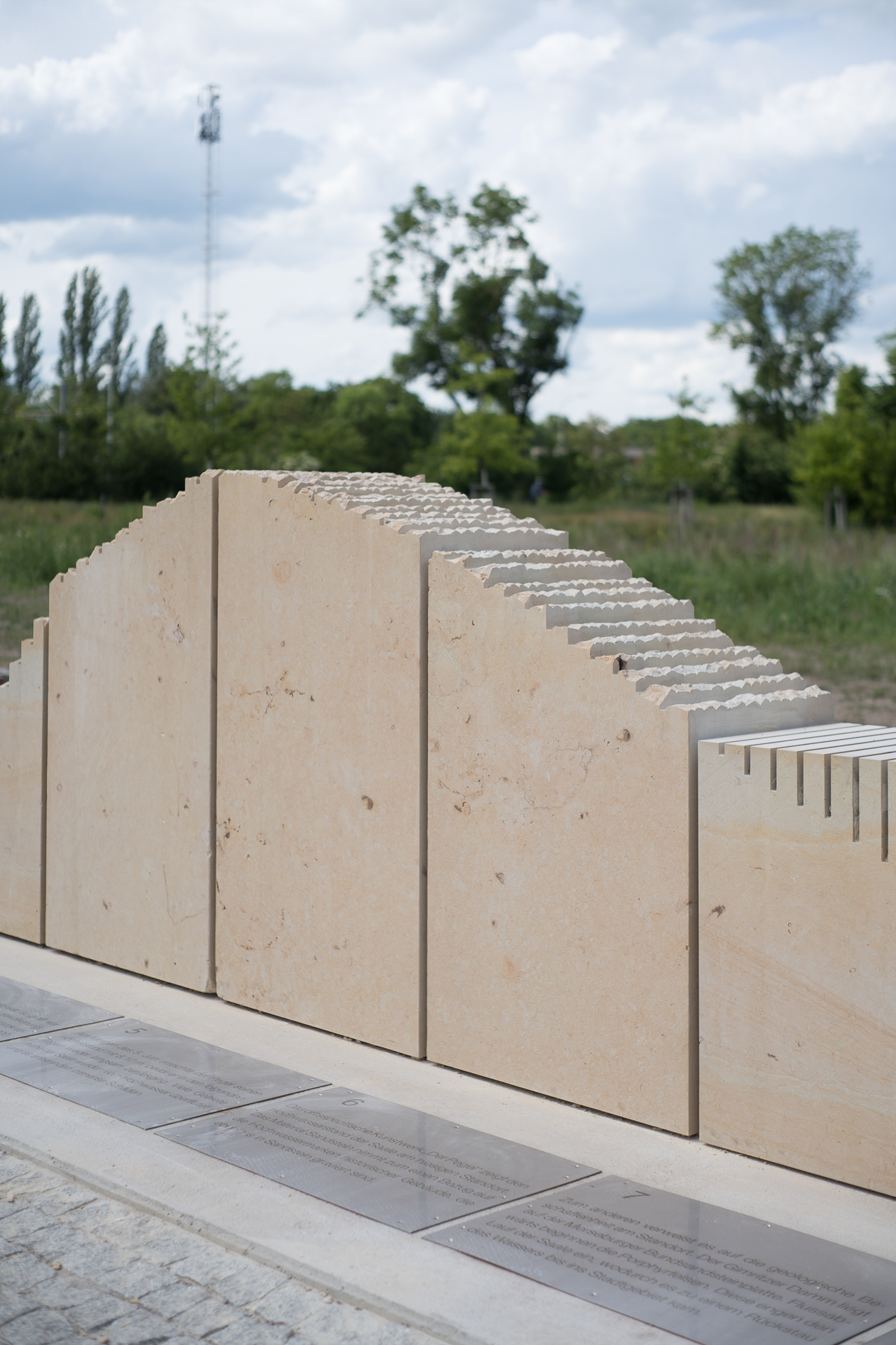
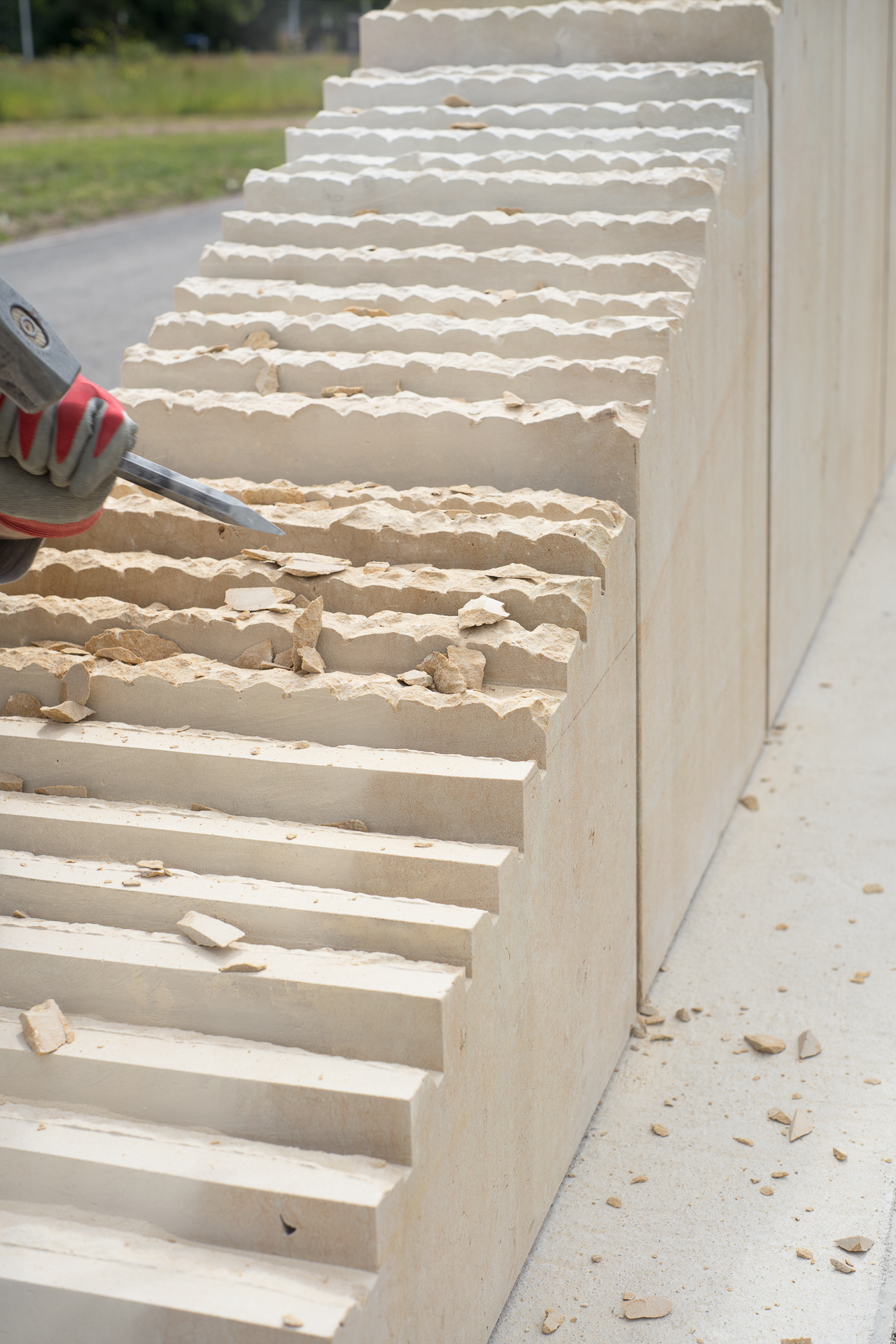
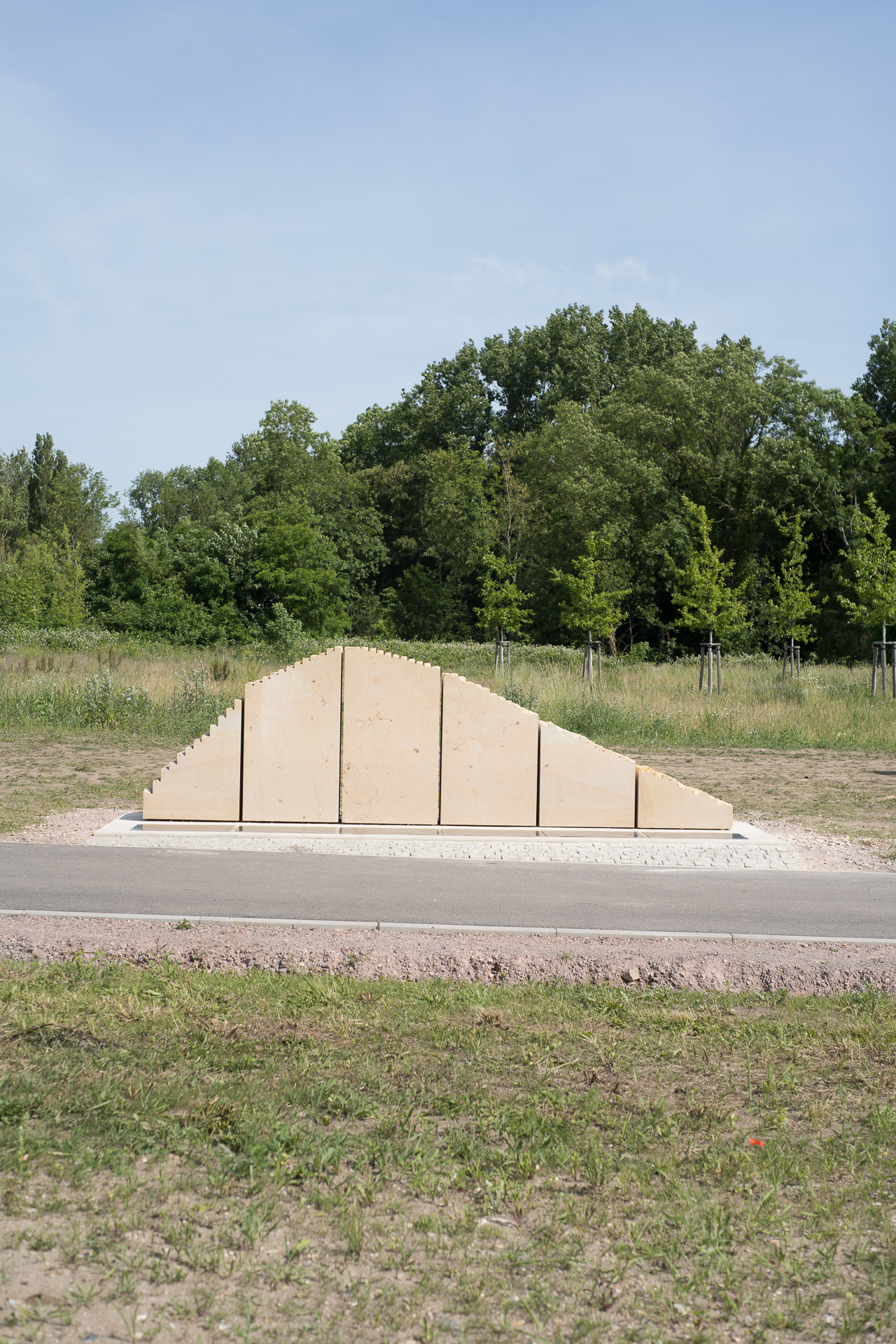
Das ortsspezifische Kunstwerk „ Der Pegel“ zeigt den Hochwasserstand der Saale vom 3.-8. Juni 2013 am Gimritzer Damm in Halle (Saale). Viele Gebiete nahe der Saale wurden damals überschwemmt und es entstanden immense Schäden.
So erschreckend dieses Ereignis war, so groß war die Hilfsbereitschaft seitens der Bevölkerung. Allein auf dem Gimritzer Damm wurden über 300.000 Sandsäcke verbaut.
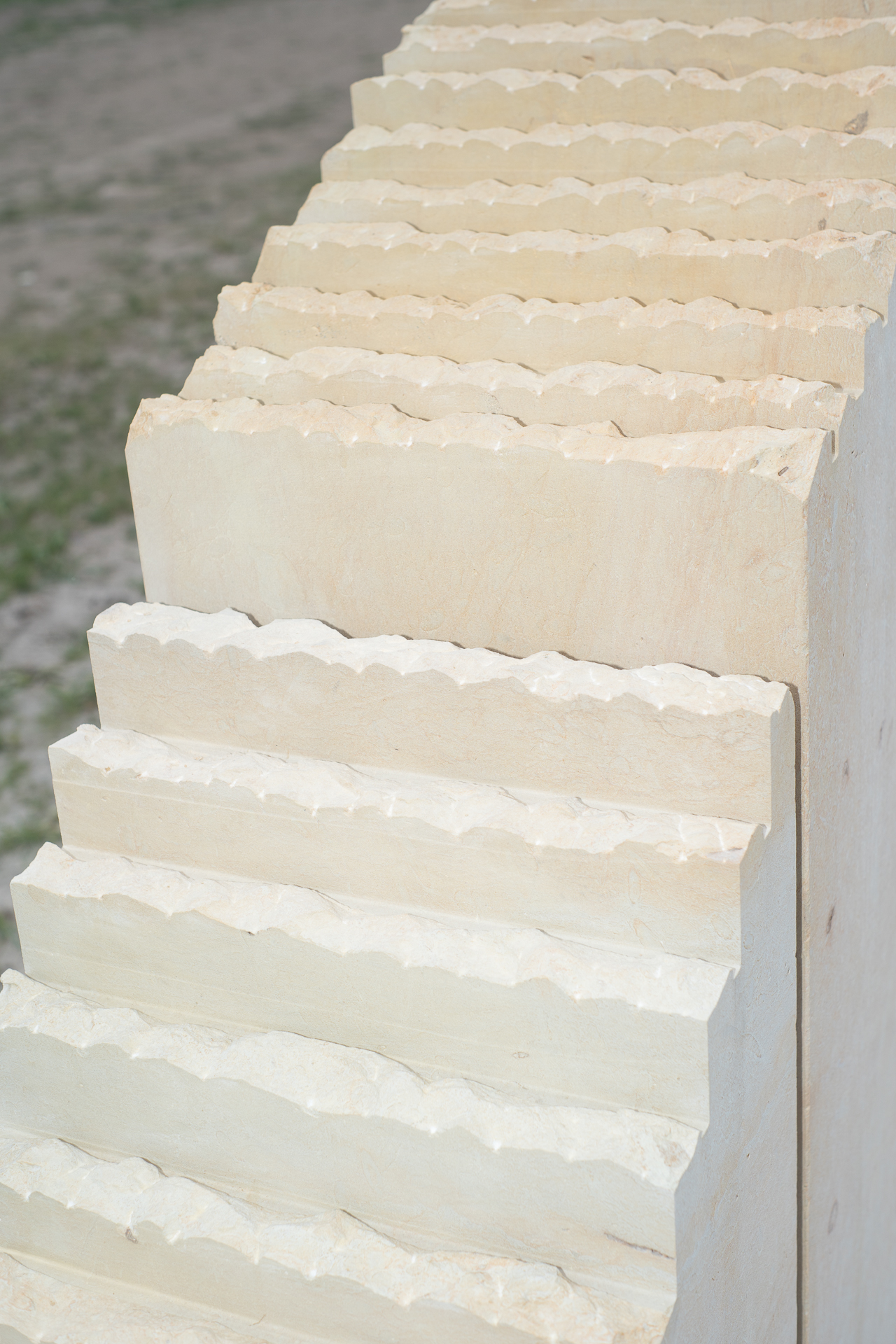
Das Material Sandstein nimmt zum einen Bezug auf die Hochwassermarken an historischen Gebäuden, die ebenfalls in Sandstein graviert sind. Zum anderen verweist es auf die geologische Beschaffenheit am Standort. Der Gimritzer Damm liegt auf der Merseburger Bundsandsteinplatte. Flussabwärts beginnen die Porphyrfelsen. Diese engen den Lauf der Saale ein, wodurch es zu einem Rückstau des Wassers bis ins Stadtgebiet kam.
13 Jahre nach dem Hochwasserereignis wurde der Pegel aus den Sandsteinblöcken vom 3.- 8. Juni bildhauerisch freilegt und am 8. Juni um 12:00 eröffnet und der Stadt Halle (Saale) übergeben.
Entstanden ist das Kunst am Bau Projekt aus einem Ideenwettbewerb des Fördervereins Pro Halle e. V. in Zusammenarbeit mit der Kunsthochschule Burg Giebichenstein Halle im Jahr 2022.
Das Kunstwerk wurde von Pro Halle e.V gefördert und in Zusammenarbeit mit den Sächsischen Sandsteinwerken umgesetzt.
The site-specific artwork “Der Pegel” depicts the flood level of the Saale River from June 3–8, 2013, at the Gimritzer Damm in Halle (Saale). Many areas near the Saale were flooded at that time, resulting in immense damage.
As terrifying as this event was, the willingness of the local population to help was just as great. On the Gimritzer Damm alone, over 300,000 sandbags were used.
The use of sandstone as a material references, on the one hand, the flood marks on historic buildings, which are also engraved in sandstone. On the other hand, it alludes to the geological composition of the site. The Gimritzer Damm lies on the Merseburg Bund sandstone plateau. Downstream, the porphyry cliffs begin. These narrow the course of the Saale River, causing the water to back up into the city.
Thirteen years after the flood, the water level marked on the sandstone blocks from June 3–8 was sculpturally revealed; the artwork was unveiled at 12:00 p.m. on June 8 and handed over to the city of Halle (Saale).
This “Art in Architecture” project emerged from an ideas competition organized by the Pro Halle e. V. support association in collaboration with the Burg Giebichenstein University of Art and Design Halle in 2022.
The artwork was funded by Pro Halle e. V. and realized in collaboration with Sächsische Sandsteinwerke.
Der Pegel, 2026
03.Juni
Sandstein
Art in public
Der Pegel, 2026
04.Juni
Sandstein
Art in public
Der Pegel, 2026
04.Juni
Sandstein
Art in public
Der Pegel, 2026
04.Juni
Sandstein
Art in public
Der Pegel, 2026
05.Juni
Sandstein
Art in public
Der Pegel, 2026
05.Juni
Sandstein
Art in public
Der Pegel, 2026
06.Juni
Sandstein
Art in public
Der Pegel, 2026
06.Juni
Sandstein
Art in public
Der Pegel, 2026
07.Juni
Sandstein
Art in public
Der Pegel, 2026
08.Juni
Sandstein
Art in public